
Gut Brain Connection and Mental Health: Nutrients as Neurotransmitters
Nutrient therapy explores how the foods we eat become the building blocks for neurotransmitters that influence mood, focus, and emotional resilience. Holistic Nutrition can help you learn about this connection.

At New Pathways, many people come to therapy seeking support for depression, anxiety, burnout, trauma, or chronic stress. Often they have already explored different treatments and are curious whether there may be deeper biological factors influencing how they feel.
An emerging area of mental health research points to something both simple and profound:
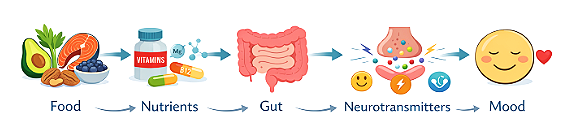
Behind every neurotransmitter is a nutrient.
Neurotransmitters are the chemical messengers that allow brain cells to communicate. They influence mood, focus, motivation, sleep, and emotional regulation. Many psychiatric medications work by adjusting the activity of these chemicals in the brain.
But neurotransmitters themselves are not the starting point.
They are actually built from nutrients within the body.
Understanding this opens the door to a broader and more integrative way of thinking about mental health.
Neurotransmitters Are Built from Nutrients
Many of the brain’s most important neurotransmitters are synthesized from amino acids and nutrients that come from food.
For example:
• Serotonin, associated with mood and emotional balance, is made from the amino acid tryptophan.
• Dopamine, which plays a role in motivation and reward, is produced from tyrosine.
• GABA, the brain’s primary calming neurotransmitter, is derived from glutamate.
These chemical reactions depend on the presence of essential nutrients such as:
• Vitamin B6
• Folate
• Magnesium
• Zinc
• Iron
• Vitamin B12
If the body does not have the nutrients required for these processes—or if metabolism is disrupted—the brain may struggle to produce and regulate neurotransmitters effectively.
From this perspective, mental health is not only psychological.
It is also biological, nutritional, and environmental.
The Gut–Brain Connection
Another key piece of the puzzle is the gut–brain axis—the ongoing communication between the digestive system and the nervous system.
The gut contains hundreds of millions of neurons and is home to trillions of microorganisms collectively known as the gut microbiome. These microbes play a role in:
• producing neurotransmitters
• regulating inflammation
• influencing immune function
• supporting nutrient absorption
• shaping the body’s stress response
In fact, a large portion of the body’s serotonin is produced in the gut.
When the gut microbiome becomes imbalanced—through chronic stress, processed foods, antibiotics, inflammation, or environmental toxins—it can affect both digestion and mood.
Many people notice that when they improve their gut health through dietary changes, their energy, mood, and mental clarity begin to shift as well.
This growing understanding of the gut–brain connection is helping reshape how we think about mental health care.
Epigenetics: How Lifestyle Influences Gene Expression
Another fascinating area of research is epigenetics.
Epigenetics refers to the way environmental and lifestyle factors influence how genes are expressed. Rather than being fixed, many genes can be turned on or off depending on the conditions in the body.
Factors that influence gene expression include:
• nutrition
• stress levels
• sleep
• movement
• environmental exposures
• social connection
While genetics may create certain vulnerabilities, epigenetics reminds us that there is also tremendous capacity for change and adaptation.
Supporting the body through nutrition, nervous system regulation, and healthy lifestyle patterns can help create the conditions for greater resilience and balance.
Methylation: Supporting Brain Chemistry at the Cellular Level
One biological process that is increasingly discussed in integrative mental health is methylation.
Methylation is a fundamental biochemical process that occurs in every cell of the body. It plays an important role in:
• neurotransmitter production
• detoxification
• DNA repair
• gene expression
• the formation of cell membranes
Methylation also helps regulate how neurotransmitters are transported and metabolized in the brain.
When methylation pathways are not functioning optimally—due to genetics, nutrient deficiencies, or environmental stress—neurotransmitter balance can be affected.
Nutrients such as folate, vitamin B12, B6, zinc, and methionine play important roles in supporting healthy methylation pathways.
This is one reason why personalized nutrient therapy looks closely at the individual biochemical needs of each person, rather than assuming everyone requires the same supplements or dietary approach.
Personalized Nutrient Therapy
As research into nutrition and brain chemistry grows, a field often referred to as personalized nutrient therapy is emerging.
Rather than taking a one-size-fits-all approach to supplements or diet, personalized nutrient therapy looks at the unique biochemical patterns of each individual.
This may involve identifying:
• nutrient deficiencies or imbalances
• genetic variations affecting metabolism
• inflammatory patterns
• gut microbiome disruption
• digestive issues affecting nutrient absorption
By addressing these underlying biological factors, personalized nutrient therapy aims to support the body’s natural ability to regulate neurotransmitters and restore balance.
For some individuals, this approach can be a powerful complement to psychotherapy and nervous system work.
Who Can Help with Personalized Nutrient Therapy?
People interested in exploring these approaches often wonder which type of practitioner to consult. Several different professionals work in this area, each bringing a slightly different focus.
Holistic Nutritionists
Holistic nutritionists focus on improving health through food-based strategies and personalized nutrition plans. They help individuals increase nutrient density, support digestion, stabilize blood sugar, and reduce inflammatory foods.
At New Pathways, Natalie Singer offers personalized nutrition plans and guidance for improving gut health and metabolic balance. She also supports individuals and small groups through structured gut reset and nutritional programs designed to restore digestive health and rebuild the body’s nutritional foundations.
Because functional medicine and naturopathic services are typically not covered by OHIP, working with a holistic nutritionist can often be a more accessible and cost-effective starting point for people interested in personalized nutrient therapy.
Naturopathic Doctors
Naturopathic doctors (NDs) are trained in natural and integrative approaches to health and focus on supporting the body’s ability to heal itself.
In Ontario, naturopathic doctors can also order laboratory testing, including blood work that may help identify nutrient deficiencies, inflammatory markers, and metabolic imbalances.
Their work may include:
nutritional therapy
digestive health support
botanical medicine
targeted supplementation
lifestyle counseling
Many naturopathic doctors work extensively with the gut–brain connection and metabolic factors related to mood and mental health.
At New Pathways, we collaborate with Dr. Marnie Luck, a naturopathic doctor who supports individuals in exploring the relationship between nutrition, metabolism, and mental wellbeing. She will also be offering a 30-Day Reset program, designed to help participants reconnect with whole foods, support gut health, and reduce inflammatory stressors.
Functional Medicine Doctors
Functional medicine doctors are medical doctors and naturopathic doctors who receive additional training in identifying the root causes of illness. They often use detailed laboratory testing to evaluate areas such as nutrient status, metabolic health, inflammation, hormonal balance, and gut health.
Functional medicine MDs, can also prescribe medications when appropriate while integrating nutrition and lifestyle interventions. In Canada, most FM doctors are naturopathic doctors who are order tests but not prescribe medications directly. They are not covered by our pubic medical system but can be covered by extended health benefits.
Functional medicine can be helpful for individuals with complex or chronic health concerns who want a deeper investigation into metabolic and biochemical patterns affecting health.
Integrating Mind, Body, and Nervous System
At New Pathways, our primary focus is psychotherapy and nervous system regulation. Through somatic therapy, mindfulness practices, and trauma-informed care, we support individuals in restoring safety and balance within the body.
At the same time, we recognize that emotional wellbeing is deeply connected to biology, nutrition, and lifestyle.
For some individuals, exploring personalized nutrient therapy alongside psychotherapy can create a powerful foundation for healing.
When the nervous system feels safe, the body is nourished, and the gut and brain are supported together, many people experience greater clarity, resilience, and emotional stability.
A Holistic Path Forward
Mental health is shaped by many interconnected factors—biology, life experience, relationships, environment, and culture.
Therapy is an important part of the journey. Medication may also play a role.
But increasingly we are learning that nutrition, gut health, and personalized nutrient therapy can also be powerful pieces of the puzzle.
By taking a whole-person approach—supporting the brain, body, and nervous system together—we create the conditions for deeper and more sustainable change.
And sometimes the path toward emotional wellbeing begins with something very simple:
supporting the nutrients that build the brain itself.
An Example: The Walsh Protocol
One example of a personalized nutrient approach used in mental health is the Walsh Protocol, developed through research at the Walsh Research Institute.
This approach explores how individual differences in biochemistry and nutrient metabolism may influence brain function and emotional wellbeing. In some cases, laboratory testing and symptom patterns are used to identify potential nutrient imbalances related to processes such as methylation, oxidative stress, or mineral balance.
Based on these findings, practitioners may develop targeted nutritional strategies designed to support the body’s natural biochemical pathways.
While this approach is not part of conventional psychiatric treatment, it is one example of how personalized nutrient therapy is being explored as a complementary way of understanding mental health.
As with any integrative approach, it is important to work with qualified health professionals when considering laboratory testing or targeted supplementation.
